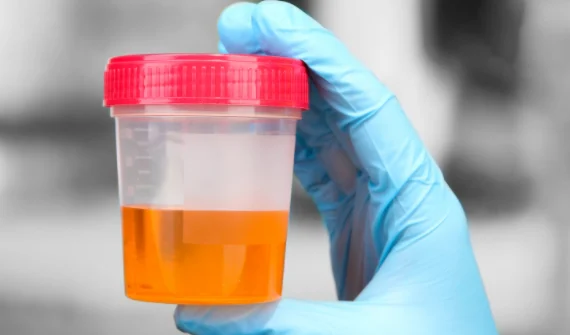
A new study has found that a simple, non-invasive urine test could identify bladder cancer more accurately than the diagnostic methods currently in use
The study, published in the journal Nature Medicine on Friday, analysed 683 urine samples from cancer patients and people without cancer.
Researchers from Stanford Medicine focused particularly on people with bladder, prostate and kidney cancers, cancers that affect the organs involved in urination and reproduction.
They found that the test they developed, called uRARE-seq, detected 95% of localised bladder cancer cases (cancer that has not spread beyond the bladder) while correctly identifying 90% of people without the disease.
Unlike DNA-based tests, the researchers said uRARE-seq looks for fragments of RNA released by cells into the urine.
RNA, or ribonucleic acid, is a molecule found in cells that helps carry genetic information and plays a role in how cells make proteins. When cells release small fragments of RNA into body fluids such as urine, those fragments can provide information about the cells they came from.
The researchers said these RNA fragments can carry information from cells in the urinary system, including cancer cells, allowing the test to identify signs of bladder cancer
The study also found that the test could detect some of the earliest and least aggressive forms of bladder cancer, including non-muscle-invasive bladder cancer, which has not spread into the muscle layer of the bladder wall.
The researchers also found that the urine test could offer clues about which treatment may work better for some bladder cancer patients.
They analysed urine samples collected before treatment and found that patients who responded well to BCG (Bacillus Calmette-Guérin), a form of immunotherapy used to treat some bladder cancers, showed more signs of immune activity. Those who did not respond had higher levels of genes linked to cell growth.
Based on these differences, the researchers developed a biomarker that could predict whether a patient was more likely to respond to BCG or chemotherapy. The biomarker had an area under the curve of 0.93, indicating a strong ability to distinguish between patients likely to respond to the two treatments.
Maximilian Diehn, the senior author of the study, described uRARE-seq as a promising method for detecting bladder cancer, assessing how aggressive it is and determining the most suitable treatment for each patient.
“RNA analysis is a promising approach for diagnosing bladder cancer since it not only allows detection of bladder cancer but can also indicate how aggressive a tumour is and what the best treatment for a given patient might be,” Diehn said.
However, he noted that the findings need to be replicated in future studies before uRARE-seq can be used routinely in clinical practice.