Abuja’s Millennium Tower: The 170-Metre Landmark Still Awaiting Completion
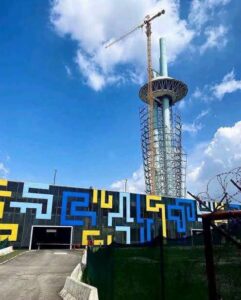
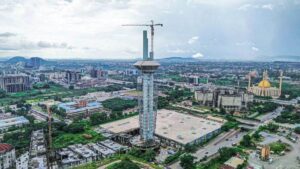
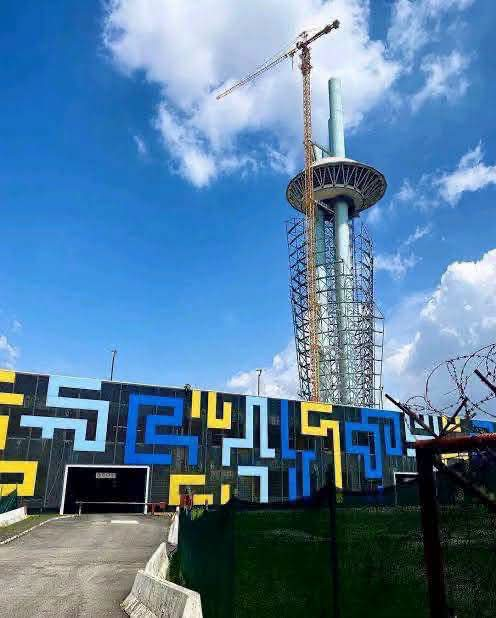
Rising above Abuja’s Central Business District is the 170-metre Millennium Tower, an ambitious architectural development envisioned to become one of Nigeria’s major cultural and tourism attractions.
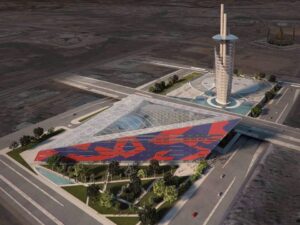
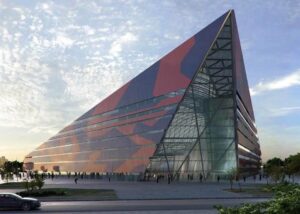
Located between the National Mosque and the National Christian Centre, the tower is part of the proposed Millennium Tower and Cultural Centre, a project designed to bring architecture, culture, tourism, hospitality and recreation together in one destination.
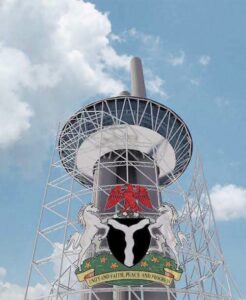
Designed by renowned Italian architect Manfredi Nicoletti, the tower features three towering concrete pillars supporting an elevated structure. Its proposed attractions include a panoramic viewing platform and a revolving restaurant, giving visitors an opportunity to enjoy spectacular views of Abuja from above.
The wider development was also planned to accommodate a cultural centre, museums, an auditorium, hotel facilities, restaurants, recreational spaces and commercial areas.
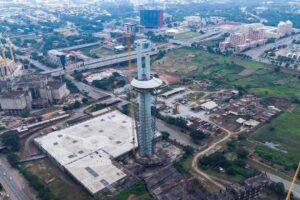
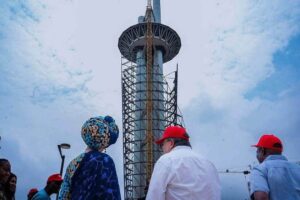
However, more than two decades after the project was initiated, the ambitious development remains incomplete.
Construction was awarded to Salini Nigeria Limited in November 2005, with work commencing in January 2007. The original contract, valued at approximately ₦53.1 billion, was subsequently revised to about ₦69.34 billion following changes to the project scope.
Funding difficulties, contract revisions and prolonged delays eventually stalled construction, leaving the iconic tower as an unfinished reminder of a vision that has yet to be realised.
In July 2026, FCT Minister Nyesom Wike disclosed that the contractor’s latest estimate for completing the project stood between ₦300 billion and ₦400 billion.
The minister explained that committing such an amount from the FCT Administration’s resources would affect funding for other essential infrastructure projects across Abuja. He therefore initiated discussions with President Bola Ahmed Tinubu on the possibility of having the Federal Government take up the project as a national responsibility.
More recently, an investigative report published by BusinessDay on November 4, 2026, provided further insight into the project’s financial history. The investigation estimated that the development was approximately 40 per cent complete and traced about ₦36.77 billion in payments associated with the project.
The report also highlighted the impact of funding shortages, contract revisions and foreign exchange exposure on its prolonged construction history.
Beyond becoming another striking feature of Abuja’s skyline, the completed Millennium Tower and Cultural Centre could offer the capital a significant tourism and cultural destination.
Its proposed attractions could support cultural exhibitions, conferences, entertainment, hospitality businesses, recreational activities and tourism-related employment. It would also provide a platform for showcasing Nigeria’s diverse cultural heritage to visitors from across the world.
For Abuja, a city with ambitions of becoming a major destination for international business, conferences and tourism, completing a development of this scale would be a significant addition to its urban landscape.
The architectural vision is already there. What remains is the funding, a clear implementation arrangement and the political commitment to bring the entire development to completion.
After more than two decades, Nigerians are still waiting to see what this landmark was originally intended to become.