The Great Northern Reckoning: 12 Undeniable Reasons the North Must Reject Tinubu in 2027.
My fellow Northerners—particularly the youth who represent our future potential, the women who sustain our households and economies, and the religious leaders who provide moral and spiritual guidance—please consider this analysis with the gravity it deserves. The moment has arrived for a profound reassessment of our region’s trajectory.
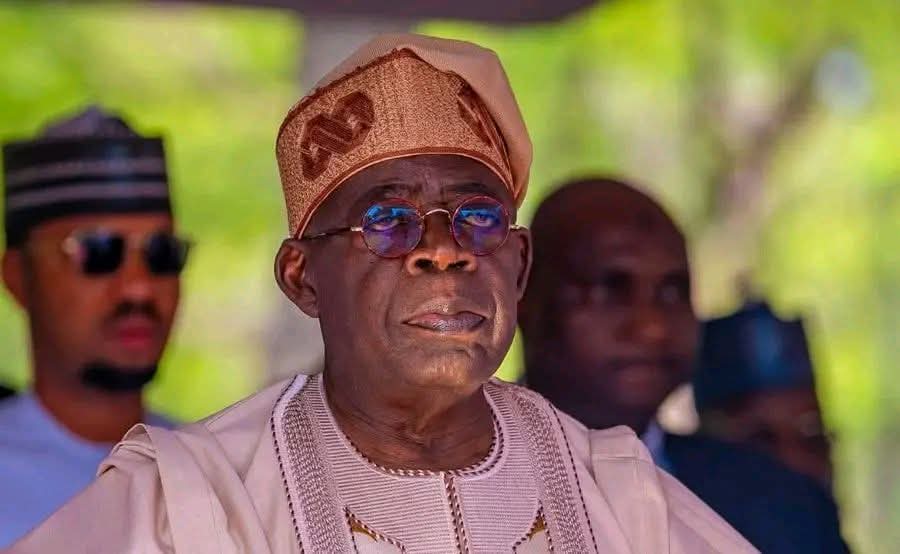
The Northern political elite have largely forsaken the populace. They occupy positions in federal and state governments, securing contracts and appointments for themselves while our rural communities endure escalating violence, hunger, and economic deprivation. They have leveraged our electoral support for personal advancement, leaving the broader population to bear the consequences. President Bola Ahmed Tinubu’s administration demonstrates a lack of sufficient concern for these issues, as evidenced by its policy priorities and resource allocations.
We cannot depend solely on our traditional leaders to address this crisis. While they remain vital custodians of our cultural heritage and communal wisdom, they are effectively constrained within their palaces. They possess limited financial resources, security apparatus, and political leverage to confront the entrenched elite. Any overt challenge risks reprisals, diminished influence, or isolation. Thus, the responsibility rests with you—the youth, with your dynamism and demographic strength; the women, with your enduring fortitude and central role in family and community life; and the religious leaders, with your ethical authority to mobilize the faithful. It is imperative that you step forward to safeguard our region, lest the North succumb to irreversible decline marked by entrenched poverty, insecurity, and marginalization.
A stark illustration of this apparent bias is evident in infrastructure spending. The administration has committed substantial funds to the Lagos-Calabar Coastal Highway, a project primarily benefiting the South-West and South-South regions. According to official State House releases in December 2025, the federal government obtained $747 million for Phase 1 Section 1 in July 2025 and an additional $1.126 billion for Phase 1 Section 2 in December 2025—totaling over $1.87 billion, equivalent to approximately three trillion naira at current exchange rates—for just two segments of this Southern initiative. In contrast, the 2026 federal budget allocates a mere N120 billion for road projects in the entire North-West zone. The North-East and North-Central regions fare similarly, with N100 billion each. Given that the North comprises over half of Nigeria’s population and landmass, this disparity underscores a pattern of disproportionate neglect rather than equitable national development.
These observations are grounded in verifiable government documents and independent assessments. Below, I outline the 12 compelling reasons why the North—led by its youth, women, and religious leaders—must strategically withhold support from Tinubu in the 2027 elections. Each reason is supported by data from sources such as the National Bureau of Statistics (NBS), World Bank reports, Central Bank of Nigeria (CBN) figures, and security analyses from organizations like SBM Intelligence and ACLED. These facts should be disseminated widely through community forums, religious gatherings, educational institutions, and digital platforms to inform collective decision-making.
1. **Multidimensional poverty has surged, with the North shouldering 65 percent of the national total.**
The NBS 2022 Multidimensional Poverty Index established a baseline of 133 million impoverished Nigerians, of which 86 million—65 percent—resided in the North. States such as Sokoto reported 91 percent poverty rates, Jigawa 83 percent, and both Zamfara and Kebbi 82 percent. The World Bank’s October 2025 Poverty and Equity Brief indicates further deterioration: an additional 45 million Nigerians have slipped into poverty since 2018, elevating the national rate to nearly 47 percent, with rural Northern poverty exceeding 75 percent. This manifests in acute deprivations affecting food security, education, healthcare, and sanitation, directly impacting children who miss schooling and families struggling with basic nutrition.
2. **The removal of fuel subsidies and naira floatation have driven food inflation, severely undermining Northern agriculture.**
Although the NBS January 2026 report notes a moderation in headline inflation to 15.1 percent and food inflation to 8.89 percent, the lingering effects of 2024-2025 peaks—where food inflation surpassed 40 percent—continue to inflict harm. Transportation costs have doubled, rendering fertilizers and market access unaffordable, while post-harvest losses have reached 40 percent. The World Bank attributes these policy-induced shocks to the impoverishment of millions more Northern households. As the region produces over 70 percent of Nigeria’s food supply, this erosion affects not only farmers’ livelihoods but also national food stability, evident in persistently high prices at markets in Kano and Maiduguri.
3. **Banditry and kidnappings persist unabated in the Northwest and Northeast.**
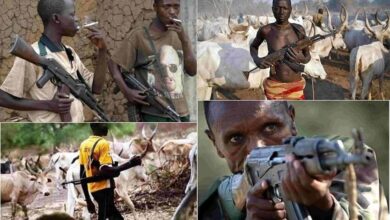
SBM Intelligence’s December 2025 report documents kidnappers amassing at least N2.57 billion in ransoms from July 2024 to June 2025. The Northwest accounted for 425 incidents and 2,938 victims—62 percent of the national figure. Data from ACLED and Nextier reveal over 2,450 abductions in 2024, with hundreds more in 2025, including schoolchildren in Kaduna, Sokoto, and Zamfara. Boko Haram and ISWAP activities continue to claim lives in Yobe and Borno. Despite substantial security expenditures, parental anxiety remains high, educational disruptions are routine, and youth vulnerability to recruitment into criminal groups increases due to economic desperation.
4. **Youth unemployment and lack of opportunities are eroding an entire generation.**
While national NBS figures suggest lower unemployment rates, the Northern context reveals a more severe reality, exacerbated by insecurity that has shuttered agricultural and commercial activities. Tinubu’s economic reforms have not generated targeted employment in industries or agro-processing for the region. This results in widespread idleness among young people, fostering social issues such as substance abuse and involvement in banditry. The youth deserve access to vocational training, credit facilities, and viable markets to harness their potential.
5. **Power generation and distribution have declined, contravening Tinubu’s explicit campaign commitment.**
Grid data indicate that available capacity decreased from 5,285 megawatts in February 2024 to 4,384 megawatts by February 2026—the lowest in 21 months—with frequent system collapses. Rural Northern areas often receive fewer than four hours of electricity daily, hampering irrigation, food preservation, and small-scale enterprises. The President’s 2023 pledge—“If I do not provide steady electricity, do not vote for me”—remains unfulfilled, perpetuating underdevelopment in a region reliant on reliable power for economic progress.
6. **Federal appointments, budgetary allocations, and infrastructure development exhibit systematic marginalization of the North.**
In addition to the Lagos-Calabar highway’s disproportionate funding, the 2026 budget designates only N120 billion for North-West roads, with comparable underinvestment in the North-East and North-Central. Key projects like the Kano-Maradi railway and Lake Chad Basin restoration languish incomplete or underfunded. Reports from the Northern Elders Forum and Arewa Consultative Forum highlight a pronounced South-West bias in executive appointments and contract awards, despite the North’s pivotal role in the 2023 electoral outcome.
7. **Child poverty and educational deficiencies have escalated to critical thresholds.**
NBS and World Bank analyses show that over 90 percent of children in the North-East and North-West experience multidimensional deprivations in education, nutrition, and developmental support. Post-subsidy removal, enrollment rates have plummeted, compounded by school closures due to security threats. This deprives the next generation of essential skills and opportunities, undermining the region’s long-term human capital.
8. **Healthcare provisioning falls short of required standards and regional needs.**
High maternal mortality rates, malnutrition impacting over 50 percent of Northern children, and inadequate medical facilities persist. The 2026 health budget allocation remains below the 15 percent benchmark set by the Abuja Declaration, insufficient for addressing the disease burden in displaced populations and underserved areas.
9. **Agricultural productivity—the cornerstone of Northern economy—is in steep decline.**
More than one million farmers have been displaced by banditry, while elevated fuel and transportation costs have rendered mechanization impractical. As the primary supplier of 70 percent of Nigeria’s foodstuffs, the North now leads in food inflation and post-harvest inefficiencies, as confirmed by World Bank evaluations.
10. **There has been a profound political betrayal following the North’s instrumental support in the 2023 elections.**
The region’s bloc votes were crucial to Tinubu’s victory. Yet, subsequent governance has offered no commensurate zoning arrangements, enhanced security measures, or equitable resource distribution. Public rejections of nominal “mobilization” funds by religious and community leaders in 2025 reflect widespread disillusionment with this imbalance.
11. **Social safety nets and palliative measures have proven inadequate and unevenly distributed.**
The purported N330 billion in cash transfers for eight million households have disproportionately favored urban and Southern locales. Rural Northern communities—comprising 72 percent of multidimensional poverty cases—have received minimal benefits, as noted in World Bank critiques of the programs’ targeting and efficacy.
12. **Macroeconomic improvements, such as increased reserves and GDP growth, primarily benefit elites rather than the Northern populace.**
While foreign reserves have risen and debt management has stabilized, these gains have not translated into tangible relief for the North, which grapples with the nation’s highest poverty intensity, insecurity, and rural demographics. The 2026 budget’s emphasis on consolidation prioritizes national debt and high-level initiatives over grassroots development in Northern wards.
Fellow Northerners, this assessment is not merely political commentary; it concerns the very sustainability of our region. The North teeters on the brink of structural collapse—characterized by deepening poverty, rampant insecurity, and food insecurity—under the Renewed Hope agenda, which has, in practice, amplified hardships for our people.
To prevail in 2027 without resorting to violence or disruption, we must adhere rigorously to legal and democratic mechanisms. First, ensure comprehensive voter registration among youth and women. Second, establish grassroots voter education initiatives in religious centers, marketplaces, academic settings, and online platforms to elucidate these 12 reasons in accessible languages such as Hausa, Fulfulde, and English. Third, forge coalitions with opposition parties that credibly commit to Northern priorities in equity and security. Fourth, convene non-violent town halls and interfaith dialogues under religious leadership to foster unity. Fifth, leverage digital tools to disseminate factual content, videos, and analyses, harnessing the informational power that has toppled entrenched regimes elsewhere.
Violence must be eschewed, as it invariably exacerbates destruction and provides pretexts for authoritarian measures. Consider Libya post-2011, where civil unrest devolved into a protracted conflict, resulting in state failure, human trafficking, and mass displacement. Similarly, in Mali, insurgencies precipitated military interventions and heightened instability. Crises enable governments to invoke emergency powers and defer elections, as seen in Zimbabwe under Robert Mugabe, where manipulated polls and states of emergency prolonged his rule, or in Ethiopia during the Tigray conflict, where security concerns delayed democratic timelines. A beleaguered Nigerian administration could similarly suspend electoral processes, formalizing undemocratic control.
Conversely, emulate models of peaceful triumph. In Senegal’s 2024 elections, youth-led civil society efforts ensured transparent voting, facilitating a smooth power transition. Ghana and South Africa have repeatedly demonstrated that robust voter participation and legal opposition can oust incumbents via the ballot box. Elevated turnout in Northern states can achieve comparable results.
Youth: Utilize your technological proficiency and vitality as instruments of change. Women: Harness your demographic influence and community networks to drive participation. Religious leaders: Employ your platforms to advocate for justice and cohesion, eschewing any incitement to discord.
This Great Northern Reckoning demands action. Withholding support from Tinubu in 2027 stems not from animosity but from a commitment to our descendants, our territory, and our principles. The evidence from NBS, World Bank, CBN, SBM Intelligence, and ACLED is irrefutable. The North must mobilize—lawfully, methodically, and resolutely—or forfeit its capacity for self-determination.
The decision rests with us. May 2027 mark the restoration of Northern dignity. Allah ya ba mu nasara. The reckoning commences now.