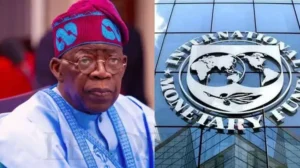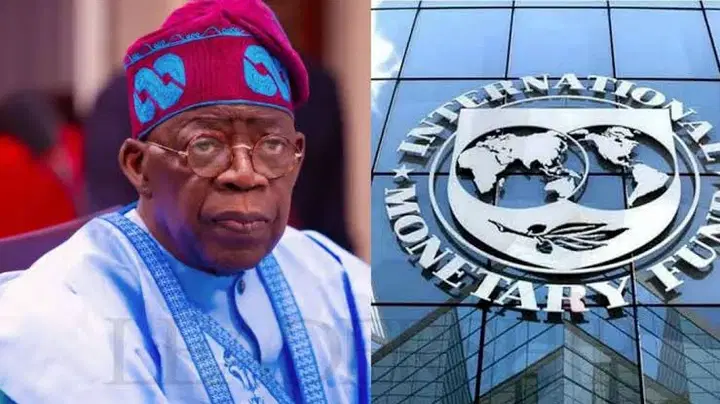
The International Monetary Fund, IMF, has warned that Nigerians may face tougher economic conditions in the near term as rising food and transportation costs continue to squeeze household incomes amid lingering global shocks.
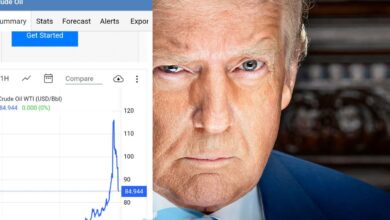
The fund also warned of a rising debt burden for the country, as Nigeria’s crude oil grades sold above $113 per barrel at the international market, yesterday, raising fresh optimism over stronger government revenue.
The surge in oil prices comes as uncertainties continue to characterise the peace talks between the United States and Iran over the Middle East war, creating the possibility of sustained high earnings for the country.
At the current level, Nigerian crude trades about $53 per barrel above the $60 benchmark in the 2026 Budget. Data from the oil market showed that Brass River and Qua Iboe grades sold for $113.82 and $113.72 per barrel, respectively
Prices, which started the year at about $64.85 per barrel and rose to $68.05 by the end of January, have climbed sharply amid geopolitical tensions.
Analysts say Nigeria could earn significant oil revenue from the conflict as long as hostilities persist.
Director of the African Department at the IMF, Abebe Selassie, at a press conference on the Economic Outlook for Sub-Saharan Africa, during the ongoing Spring Meetings of the World Bank/IMF in Washington DC, yesterday, said the impact of the ongoing crisis was already being felt strongly across the region, including Nigeria, with significant pressure on the cost of living.
According to him, “The immediate effect will be quite a bit of pressure, including on food security, either through the limited availability of fertilizer, expensive fertilizer, or even more immediately, as transportation costs have gone up, it’s going to raise the cost of food and so quite a bit of dislocation.
“We’re already seeing quite a lot of increase in transportation prices that people are facing already. Transportation costs are very high for people in urban areas, rural areas even more so.”
Highlighting the growing strain on households, Selassie said: “We are already seeing quite a bit of a pinch from the crisis on people. It is making life difficult for people.”
On how governments, including Nigeria’s, should respond, he stressed the importance of maintaining reform momentum despite limited fiscal space.
“What is it that governments can do given the limited fiscal space? First point I need to make is we shouldn’t underestimate just how much governments have done to try and position themselves better to weather more of these shocks,” he said.
He noted that recent reforms have helped stabilise economies: “Steps have been taken to stabilise debt, to reduce fiscal deficits. So that stabilization, I think, helps now when another shock like this comes, because there is a little bit more scope to try and defray the cost.”
However, he cautioned against abandoning ongoing reforms, saying: “What we are pleading is that these interventions are consistent with the medium-term objectives that countries have, and that they’re not thrown off course by this because that would be a double whammy for countries.”
On Nigeria’s debt profile, Selassie emphasised prudent management rather than a shift in borrowing strategy.
“Whether they borrow externally or domestically has to be seen in totality, what’s really important is trying to keep the level of debt as manageable as possible relative to debt service capacity.
“Nigeria has a fantastic Debt Management Office. It depends on the macro context.”
On fiscal priorities, he advised governments to focus on protecting critical spending: “In the short term, the idea is to reprioritise spending, protect priority spending and also to improve the efficiency of spending.”
He further stressed the need to boost revenues, noting: “Domestic revenue mobilisation, tax policy, tax efficiency and the capacity to elaborate policy, but also implement policy” are critical.
Selassie also underscored the importance of public engagement, stating: “All of that will require difficult discussions, and communication is important. Engaging with stakeholders is important.”
On broader structural reforms, he said technology and trade could support resilience. “We’re already seeing efforts by governments to use AI to improve tax systems, to improve service delivery, managed well, [it] should help the region converge faster.”
He also pointed to trade integration challenges, noting that while progress has been made under the African Continental Free Trade Area, “there are key negotiations to be concluded and that limits the effectiveness of trade as a shock buffer.”
Reaffirming IMF’s readiness to support countries, he said: “the IMF is the institution that countries turn to at times like this. We are geared up to see how we can support countries as quickly as possible.”
Flags rising debt burden, says debt-to-GDP seen at 33.1% by 2027
Meanwhile, the IMF has also projected that Nigeria’s debt-to-GDP ratio will rise to 33.1 percent in 2027, despite a modest downward revision from its earlier estimate of 35.3 percent. The figure remains higher than the 32.3 percent projected for 2026.
The projection is contained in the Fund’s latest Fiscal Monitor Report released in Washington. It comes as Nigeria’s total public debt rose to N159.27 trillion at the end of the fourth quarter of 2025, according to the Debt Management Office, from N153.29 trillion in the previous quarter.
It warned of a deteriorating fiscal outlook globally, noting that rising geopolitical tensions, including the Middle East conflict, could further strain public finances through higher fuel and food prices, tighter financial conditions, and increased defence spending.
“Global debt-at-risk three years ahead now stands near 117 percent of GDP, underscoring heightened downside risks,” the IMF said.
Speaking on the report, IMF Director of Fiscal Affairs, Rodrigo Valdés, urged governments to rebuild fiscal buffers and avoid delaying tough decisions.
“Crisis, of course, require emergency support and people focus on the crisis, but the ability to respond really depends on pre-existing fiscal space, and too often, the needed consolidation is postponed,” Valdes said
He added that countries must strengthen revenue mobilisation and avoid policies that could worsen fiscal risks.
“It would make just harder the central bank job in terms of inflation control,” Valdes said, warning against broad-based subsidies that are “fiscally costly, regressive, and hard to unwind.”
The contrasting developments highlight Nigeria’s delicate fiscal position where a potential oil windfall offers short-term relief, even as structural debt pressures continue to build.
Analysts/Experts react
Reacting on the rising oil price and Debt to GDP ratio, David Adonri, Analyst and Executive Vice Chairman of Highcap Securities Limited, said: “ Debt to GDP ratio is an important metric for measuring sustainability but more crucial is the Debt Service Ratio. Nigeria’s Debt to GDP ratio of 33.1 percent as projected should not be an overarching worry but will the economy have the income capacity to service debt at that level?
“Nigeria is in debt trap. There may be no benefit from rising crude oil price as the windfall may go into foreign debt servicing or expended on consumption.
The windfall may be diverted to expenditures not provided for in the appropriation act. I will be happy if government utilises the windfall to finance production infrastructure for capital goods and armament production but I am very skeptical.”
Also reacting, Economy & Communications expert, Clifford Egbomeade, said: “The IMF’s projection of a 33.1 percent debt-to-GDP ratio by 2027 will, in certain quarters, be cited as evidence of fiscal prudence. Compared to a global average, the IMF warns is heading toward 100 percent of GDP by 2029, Nigeria’s numbers appear manageable. But that comparison, while reassuring, should not obscure the more important domestic picture.
“The more instructive measure is not the ratio itself but what underlies it. Nigeria’s GDP is significantly buoyed by an informal economy that contributes little to government revenue. Debt serviceability, therefore, depends on a narrow formal tax base. With total public debt already at N159.27 trillion as of Q4 2025, a N14.6 trillion increase year-on-year, and the administration seeking $6 billion in additional external borrowing, the fiscal position warrants careful management going forward.”
Continuing, he said: “The 2027 timeline is also notable. It coincides with a general election, a period that historically tests fiscal discipline in many emerging economies, Nigeria included.
Nigerian crude grades Brass River and Qua Iboe trading above $113 per barrel against a 2026 budget benchmark of $60 represents a significant revenue opportunity. Combined with production recovery to 1.8 million barrels per day and growing demand from Asian buyers such as Japan, who are redirecting purchases away from Middle East supply disrupted by the Iran-Israel conflict, the conditions for a meaningful fiscal boost are present.
“The priority now is ensuring that the windfall is deployed with discipline, channelled toward deficit reduction, social spending, and infrastructure rather than absorbed by recurrent expenditure.
Production consistency remains the underlying variable. Nigeria’s oil sector has historically underperformed its quotas due to pipeline infrastructure challenges and operational losses.
Addressing those constraints is what converts a favourable price environment into durable, people-centred economic outcomes.”
Also reacting, the National President of the Oil and Gas Services Providers Association of Nigeria, OGSPAN, Mazi Colman Obasi, said: “There is no doubt that Nigeria could witness a surge in oil revenue above projections in the 2026 budget, as the Middle East conflict continues to disrupt global supply and drive-up prices.
“However, Nigeria should also be prepared to pay more for petroleum products. Refiners, including the Dangote Petroleum Refinery, which incur higher costs in procuring and refining crude oil, are likely to pass these costs on to consumers through higher prices.
“This will impact inflation and worsen poverty, especially as the Federal Government remains opposed to subsidising petroleum products. The cost of transporting goods and people is also expected to rise, further deepening the hardship Nigerians are currently experiencing,” he added.
These attacks raise
questions about intent and response. President Bola Tinubu must resist interpreting insecurity through a political lens, prioritizing lives over re-election. Simultaneously, corruption within the security architecture must be addressed. Beyond funding, strict transparency and accountability are essential. A comprehensive strategy combining political will with institutional reform is the only way to ensure lasting peace.
—Kingsley Chikwendu,Journalist
The killings in Jos are exhausting; it feels like a cycle that never ends. While the President’s visit shows concern, Nigerians need more than acknowledgment after the fact. We need prevention, not just reactions. Security must be community-focused, with real accountability for lost lives. Until safety is guaranteed, trust in the government’s progress will remain broken.
—Eunice Omoruyi, Entrepreneur
The killings in Jos once again expose Nigeria’s security failure to prevent recurring violence. While President Tinubu’s visit conveys symbolic concern, it remains a ritual of condolence unmatched by intelligence-driven action. To stop further bloodshed, the government must shift to proactive security anchored on local intelligence, rapid response, and strict accountability for those failing in their duties.
—Okwy James Ezema, Publisher
The killings in Jos and across Nigeria clearly demonstrate a lack of leadership with the courage and capacity to confront insecurity. This failure is a tragic result of playing politics with precious lives. Until the right leaders are in place, an end to these senseless killings remains out of reach, as leadership continues to fail the people.
—Olajide Ajana, Legal practitioner
The recent Jos killings symbolize Nigeria’s failing system. President Tinubu’s visit to Plateau State demoralized the endangered population, as he insultingly demanded victims’ families come to him rather than visiting the trouble zones himself. To restore hope and prevent future attacks, the government must prioritize arresting both the attackers and their sponsors to ensure lasting national security.
—Uche R. Ogbonnaya, Journalist
The Jos killings painfully remind us of Nigeria’s fragile peace. While President Tinubu’s visit signals concern, Nigerians demand swift, decisive action over condolences. We need political will to protect lives, boost intelligence, and prosecute perpetrators. Prevention requires proactive security, early warning systems, and federal-state collaboration. Addressing poverty and mistrust through reform and dialogue is critical to ending this cycle.
—Barnabas Akindele, Communications specialist.