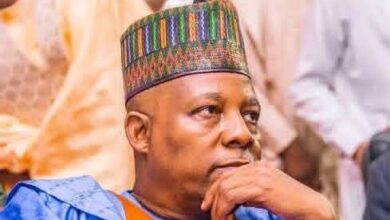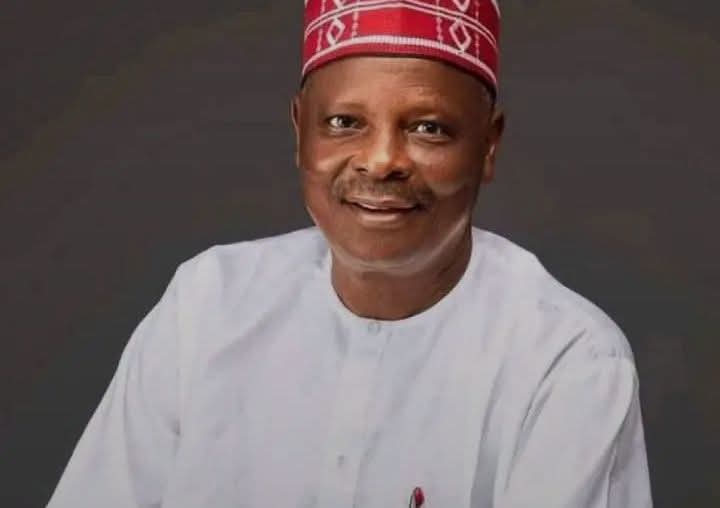
Is Rabiu Musa Kwankwaso Secretly Working for Bola Tinubu? The North Deserves an Answer
By Mohammed Bello Doka
2 May, 2026
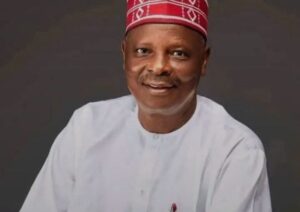
Is Rabiu Musa Kwankwaso secretly working for President Bola Tinubu to divide the North?
The question is no longer the preserve of conspiracy theorists. It has crept into the sober columns of mainstream political analysis, voiced by opposition chieftains, party insiders, and even Kwankwaso’s own factional leaders. The former Kano State governor and serial presidential hopeful has displayed a pattern of behaviour so consistent it now resembles a script: meet Tinubu, defect to a new party, divide opposition votes, and watch the North lose. Twice in three years, the script has played out. And as 2027 approaches, the question facing every northern voter is whether Kwankwaso is a genuine opposition figure or a political spoiler operating under the ruling party’s benevolent gaze.
The Paris Meeting That Changed Everything
Rewind to May 2023. The presidential election had just been concluded. Bola Tinubu was president-elect. And instead of rallying with fellow opposition figures to challenge the results or present a united front, Kwankwaso flew to Paris for a four-hour meeting with Tinubu. The meeting sent shockwaves through both the APC and the opposition. A leaked audio later revealed that then-Kano Governor Abdullahi Ganduje — Kwankwaso’s estranged political foe — had been consulted by Tinubu beforehand, a clear indication that the meeting was no casual encounter.
What was discussed? The public never learned the full details. But the suspicion that Kwankwaso had “indirectly sided the victory of the APC’s presidential candidate” or “played the role of a spoiler against Atiku’s hold on the North” became widespread. Speculation swirled that Kwankwaso was angling for a ministerial slot or even Tinubu’s running mate position in 2027. In the end, he received neither — but the damage was done. In Kano, where Atiku might have expected a strong showing, Kwankwaso’s presence on the ballot split the northern vote three ways, indirectly contributing to Tinubu’s narrow victory.
The 2023 Election: A Spoiler’s Masterclass
Let us revisit the cold arithmetic of 2023. Atiku Abubakar won over 6.9 million votes. Kwankwaso, despite his formidable Kwankwasiyya machinery, managed just 1.5 million — a mere 6.23 per cent of the votes cast. Yet those 1.5 million votes were strategically placed. In Kano State, Kwankwaso polled 997,279 votes, effectively siphoning a huge chunk of the votes that would otherwise have gone to Atiku, who has significant support in the North-West. Without Kwankwaso in the race, the opposition could have presented a united front and easily defeated Tinubu. Instead, the former governor’s vanity project handed the presidency to the APC on a silver platter.
His own party saw the betrayal. The Vice Chairman (South-West) of the NNPP, Wasiu Ajirotutu, later described Kwankwaso as a “political liability” and “a pretender and not a contender,” accusing him of meeting Tinubu “four days before the presidential election” in an act of “anti-party activities”.
The 2025-2026 Courtship: A Repeat Performance
Fast-forward to 2025. The pattern repeated itself with uncanny precision. Throughout late 2025 and early 2026, Kwankwaso engaged in a series of meetings and negotiations with APC leadership. In January 2026, APC National Chairman Nentawe Yilwatda publicly announced that the ruling party’s doors remained “still open for Kwankwaso to join the APC.” Speculation intensified that Kwankwaso was being pencilled in as Vice President Kashim Shettima’s replacement on Tinubu’s 2027 re-election ticket, after mounting pressure to drop the Muslim-Muslim ticket.
Kwankwaso, for his part, did nothing to dispel the rumours. Instead, he laid out his conditions for defection: he would only leave the NNPP if offered a presidential or vice-presidential ticket by another party ahead of the 2027 election. When the APC reportedly offered him a vice-presidential slot and control of up to 20 per cent of the party’s national structure, the talks collapsed — not because Kwankwaso refused to work with Tinubu, but because his demands were deemed “unrealistic.”
Then came the defection. In March 2026, Kwankwaso abandoned the NNPP — the party he founded — and joined the African Democratic Congress (ADC). The factional NNPP National Chairman, Dr Agbo Major, issued a chilling warning: “Kwankwaso will always come as a gentleman at the beginning, but by the time those around him begin to influence him, they will set ADC on fire.” His verdict on Kwankwaso’s electoral viability was devastating: “How is he a viable opposition candidate? He has all the leverage but ended up winning only Kano State.”
From ADC to NDC: The Caravan Keeps Moving
Now, in May 2026, barely two months after joining the ADC, Kwankwaso is reportedly set to defect again — this time to the National Democratic Congress (NDC), alongside Peter Obi. The Kwankwasiyya movement announced that stakeholders from all 44 local government areas of Kano have given him unanimous approval, with the defection expected “next week.”
Has the ADC leadership crisis driven him away? Perhaps. But the pattern is unmistakable. Every time Kwankwaso enters a political platform, he stays just long enough to ensure that platform cannot mount a credible challenge to the APC. Then he moves on, leaving behind a trail of fractured oppositions and disappointed supporters. And every step of the way, his moves are preceded or accompanied by meetings with Tinubu or APC leadership.
The Northern Betrayal
Kwankwaso’s defenders will argue that he is merely a savvy politician protecting his interests. But this is not savvy — it is sabotage. The North is bleeding. Nearly 35 million people in northern Nigeria face severe food insecurity. Over 600 children have died from malnutrition in Borno, Sokoto, Yobe and Zamfara. Boko Haram and armed bandits continue to terrorise communities. Nigeria ranks 115th out of 123 countries on the Global Hunger Index. This is the moment that requires a united, focused, and principled opposition. Instead, the North gets Kwankwaso — a man who cannot stay in a party for more than a few months, whose political travels have systematically divided the opposition and handed victory to the APC.
The comparison to the great northern progressives of an earlier era — the Sardauna Ahmadu Bello, Tafawa Balewa, and even the legendary Aminu Kano — is now impossible to sustain. Those men built institutions and fought for ideological causes. They did not defect every election cycle. They did not treat political parties as disposable vehicles for personal ambition. Kwankwaso, by contrast, has become notorious for his flimsy justifications for defection and his blatant power plays masked as populism — ultimately seeking relevance at any cost.
Conclusion: The Question the North Must Ask
Is Kwankwaso secretly working for Tinubu? The evidence does not amount to a smoking gun, but there is enough smoke to fill the northern sky. The Paris meeting in 2023, the repeated courtship with the APC throughout 2025 and early 2026, the refusal to unite with Atiku or behind a single opposition candidate, the perpetual defections that fracture every platform he touches — all of it serves the same beneficiary: Bola Tinubu.
If Kwankwaso truly wanted to defeat Tinubu, he would have stepped aside in 2023. He would have backed a single northern candidate. He would not have flown to Paris to meet the president-elect while his opposition colleagues were fighting for electoral justice. He would not be moving from ADC to NDC in 2026 while Tinubu’s APC watches and smiles.
Perhaps the most damning testimony comes from the NNPP’s own National Secretary, Comrade Olaposi Oginni, who alleged in July 2025 that “Kwankwaso and his Kwankwasiyya movement may be using the NNPP as a political bargaining chip in clandestine negotiations for membership and a position of influence within the APC.” Oginni added that the former governor “lacks integrity and cannot stay in a party he can’t dominate.”
If these allegations are false, Kwankwaso owes the North a clear and unequivocal denial, backed by transparent action — not another defection, not another meeting with Tinubu, not another opposition-splitting presidential run that he knows he cannot win.
If they are true, then the North will have its answer. And it will not forgive.
The question lingers. The clock ticks toward 2027. And Rabiu Musa Kwankwaso remains silent.