N10,000 Can Feed Modest Family For Several Days — Tinubu’s Aide
•• Tense Exchange Erupts as Female Attendee Confronts Presidential Adviser Over Unaffordable Food, Street Crime
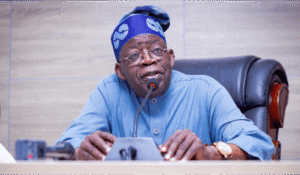
A video of a tense public exchange has thrust presidential economic adviser Tope Fasua into the centre of Nigeria’s cost‑of‑living debate after he claimed that a modest family can still feed for several days with N10,000 despite soaring inflation.
The Special Adviser to President Bola Tinubu on Economic Affairs made the remark during a members‑only “Coffee Hangout” organised by Kay Hikers Club in Abuja. A female attendee, whose identity was not publicly disclosed, directly challenged Fasua on what she described as the government’s detachment from the harsh realities Nigerians face daily.
“Are you aware you can no longer buy tomato worth ₦500 from the market like you used to 10 or 15 years ago?” she asked, her voice rising. “Something as basic as food has now become something people practically beg for.” She then linked the growing incidence of street crime and phone snatching to deepening poverty and underpaid workers, telling the aide: “The gatesmen of your estates, your security guards, are underpaid. That is equal to you being robbed or raped as a woman. You are not safe anymore.”
The woman also referenced rising ride‑hailing fares and repeated that basic necessities had become unaffordable. “Nigerians are no numbers. We are real people going through real hell,” she insisted.
Fasua, visibly unsettled, sought to push back against what he called an exaggeration. “A modest family will feed for several days with ₦10,000,” he said, acknowledging that prices have risen but urging Nigerians to adopt more disciplined spending habits. “Cut your coat according to your cloth. I go to the market too — I have customers in Utako market, in Wuse market. I like shopping and I test things. You can buy foodstuff which you cook at home.”
When the woman challenged his claim that phone snatching is no longer a problem, Fasua dismissed the concern, drawing a comparison to London. “In the streets of London, go to UK, you see phone smashing. Nigerians have moved ahead from all these phone snatching. It is not a major crisis in Nigeria. I do my walks in the morning everywhere — it’s not an issue.”
He also rejected comparisons between Nigeria and the United States, insisting that living standards should be measured by local purchasing power parity. “We are not in the US. $10 will go so far in this country, but in the US you can do very little with it.”
The adviser further accused Nigerians of sensationalising economic challenges. “I know things are expensive, more expensive than they were before. But if we want sensation, government will never win.”
PUBLIC BACKLASH
The video, which circulated widely on Instagram on Thursday, drew swift condemnation online. Critics accused Fasua of downplaying the severity of inflation and living conditions that have left millions scrambling to afford basic food items. A male attendee at the event also confronted the aide, saying: “I feel like you are beginning to spiritualise the issues in Nigeria when you say mindset. It’s not actually supposed to be a mindset – it’s a reality.”
Fasua responded that while government policies shape outcomes, individuals still have room to adjust their survival strategies. “There’s no amount of money that we have that we cannot give a little out of.”
BY THE NUMBERS
The aide’s assertion that N10,000 can feed a modest family for several days is at odds with the daily reality for many Nigerians. According to a March 2026 survey by the SBM Intelligence, the cost of preparing a pot of jollof rice for a family of five rose to N30,435 in the first quarter of 2026 – a 19.4% increase in six months. Driven by global energy shocks and petrol prices above N1,300 per litre, food inflation hit 14.31% year‑on‑year, with the price of a 50kg bag of local rice leaping 20.5% to N112,000 in March 2026.
In April, residents of the Federal Capital Territory told the News Agency of Nigeria that N10,000 worth of groceries no longer lasts a week in areas such as Nyanya and Dutse. One civil servant, Chris Haggai, said his family has been forced to skip meals to survive.
A Tribune Online analysis of household spending found that food alone typically swallows over N104,000 monthly for the average family, while transportation hovers near N52,000 and rent around N75,000. Small families of two to three persons regularly spend between N120,000 and N180,000 per month on food, and medium‑sized families of four to five often spend from N180,000 to N300,000 monthly, according to user feedback collected in January.
Meanwhile, the minimum wage of N70,000 per year, which works out to roughly N5,833 per month, places even N10,000 beyond the reach of those earning the statutory minimum.
GOVERNMENT’S POSITION
Fasua’s remarks are the latest in a series of comments by presidential aides that have aggravated public sentiment over the Tinubu administration’s handling of economic reforms. In April 2025, the same aide stated that N2,500 could buy a meal even in the upscale Lekki area of Lagos. The current exchange – which took place as insecurity and rising costs continue to fuel hunger protests across parts of northern Nigeria – underscores a growing chasm between official messaging and the lived experience of millions of citizens.
When the female attendee demanded to know how the government plans to mitigate grassroots suffering, Fasua replied that government cannot satisfy every expectation. He reiterated that households must adapt their spending habits and manage available resources more carefully.
As of press time, the presidency had not issued an official statement on Fasua’s remarks. But the video has already triggered a wave of social media backlash, with many Nigerians calling for greater empathy from government officials and more targeted measures to alleviate the worsening cost‑of‑living crisis.