From NNPP to ADC to NDC: Is Kwankwaso the Solution or the Problem?
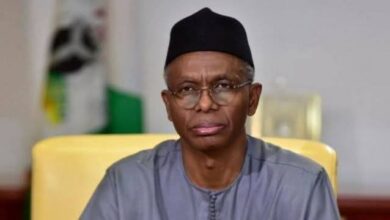
The question writes itself now. Rabiu Musa Kwankwaso, the former governor of Kano State and leader of the Kwankwasiyya movement, has completed yet another political migration. In March 2026, he resigned from the New Nigeria Peoples Party, citing the need for strategic realignment to effectively change the nation. Within weeks, he had landed in the African Democratic Congress, only to flee again in May 2026, alleging internal crises and an individual trying to hijack the party. Now he sits in the Nigeria Democratic Congress, a party barely four months old, and already the same script is playing out. Candidates are being replaced. Allies are threatening defections. And party officials are publicly accusing Kwankwaso of attempting to swallow their structure whole. The pattern is unmistakable. The question that must now be asked across every platform he has touched is this: is Kwankwaso the solution or the problem?
The resignation from the NNPP came on March 29, 2026. In his formal letter, Kwankwaso expressed gratitude for the honour of serving as the party’s national leader and presidential candidate in the 2023 elections, describing his departure as painful but necessary given the current trajectory of the nation’s political landscape which calls for strategic realignment. He promised to identify with another political platform that offers the best opportunity to effectively change the nation. On March 30, he was received into the ADC in a grand ceremony in Kano, witnessed by the ADC National Executive Committee led by Senator David Mark, Peter Obi, Rotimi Amaechi, and Senator Aminu Waziri Tambuwal. The Kwankwasiyya movement described the decision as strategic and value-driven, reflecting an unwavering commitment to democratic values and good governance.
Barely five weeks later, the marriage collapsed. On May 4, 2026, the Abuja coordinator of the Obi-Kwankwaso movement, Jabir Ibrahim Yaro, explained the exit. He claimed that opposition parties in Nigeria are in trouble because there is no single opposition party that is clean and without internal crisis. He alleged that an individual was trying to hijack the ADC and stop everyone from expressing their own interests. He also cited a recent Supreme Court judgment, which he described as a trap, claiming that a minister was allegedly controlling the Federal High Court. These were the reasons given for abandoning a party that had welcomed Kwankwaso with open arms just weeks earlier.
What makes the ADC exit particularly instructive is what Kwankwaso himself had said about power-sharing upon entering the party. Just days after joining, he addressed his supporters in Kano and revealed that his group was initially offered 80 per cent of positions in the ADC structure but accepted 60 percent. He boasted that they showed the ADC that they wanted everyone else to come in. He recalled that when his movement moved from the PDP to the APC, they did the same 60-40 arrangement. He told his followers that in every local government in Kano, they were the ones who have chairmen and other leaders across the 44, but after an outcry, they had given the old members 10 out of 44. This was Kwankwaso describing his own version of magnanimity: we control almost everything, but we have graciously thrown them a few crumbs. It is a revealing glimpse into a political philosophy that cannot conceive of genuine power-sharing, only of controlled concessions.
The philosopher John Dalberg-Acton once observed that power tends to corrupt, and absolute power corrupts absolutely. But there is a corollary that applies even more precisely to Kwankwaso’s situation: the refusal to share power is not a sign of strength but of deep insecurity about one’s ability to hold influence without total control. Kwankwaso does not enter parties as a partner. He enters as a conqueror. And when the conquered refuse to remain subdued, he declares the territory ungovernable and moves on.
Now we arrive at the NDC. The party was registered by INEC on February 5, 2026. It is barely six months old. Kwankwaso joined in May 2026 alongside Peter Obi, and almost immediately a power-sharing deal was brokered by the party’s national leader, former Bayelsa State Governor Henry Seriake Dickson. The agreement gave Kwankwaso and his Kwankwasiyya movement 60 per cent of the party’s Kano structure, with the original party leadership retaining 40 per cent. It was a compromise designed to accommodate him without displacing the people who built the platform. It has already collapsed.
According to a joint statement from the NDC North-West Vice Chairman, Mohammed Rabiu Serina, and Kano State Chairman, Hussaini Isa Mariga, once the nomination process began, Kwankwaso abandoned the agreement entirely. All nomination forms for the governorship, Senate, House of Representatives, and State House of Assembly seats in Kano were allegedly taken by Kwankwaso’s loyalists, leaving long-standing party members, including Serina and Mariga themselves, without access. Serina said he made a proposal that only a handful of legislative tickets be set aside for non-Kwankwasiyya members, but was turned down. Dickson reportedly met Kwankwaso personally on two occasions to seek a resolution, while the National Working Committee sent a separate delegation. Both efforts failed.
The Kano NDC leadership responded by replacing several Kwankwasiyya-nominated candidates and issuing a revised list. Among those approved under the new list for federal constituencies were Isma’il Idris Sani in Kumbotso, Nasiru Ali Ahmed in Nassarawa, Kabiru Ishaq Sa’id in Kano Municipal, and Dayyabu Jamilu Ibrahim in Doguwa/Tudun Wada. Changes were also made to State House of Assembly tickets in Dala, Tarauni, Kumbotso, Ungogo, and Dawakin Kudu. The revised list was copied to Dickson, Kwankwaso, and the NDC North-West Zonal Chairman. Kwankwaso reportedly threatened to leave the party if the changes are allowed to stand. The Kwankwasiyya movement has since debunked reports of his planned exit, with spokesman Habeeb Saleh Mohammed describing the claims as unsubstantiated. He insisted that the movement conducted its primaries transparently on May 29 and that there were no complaints from party members or aspirants during that period.
But the Kwankwasiyya spokesman’s denial raises more questions than it answers. If there were no complaints during the process, why did the Kano NDC chairman feel compelled to issue a revised list? Why did the party’s North-West vice chairman go on record with detailed allegations of a breached agreement? Why did the party’s national leader need to intervene personally on two separate occasions? The silence from the Kwankwasiyya camp on these specifics is telling. Denials without rebuttals are not defences. They are evasions.
The NDC stakeholders have now demanded answers. A group led by co-convener Uche Uzomba held a press conference demanding to know why primary election results had not been released more than ten days after the exercise. They warned that every day of silence makes the NDC look no different from those it has criticised. The party’s national leadership has since announced measures to strengthen internal democracy, including a code of conduct for party officials and a national reconciliation committee. The NDC declared that it is being built as a lasting institution rather than a personality-driven organisation, political movement, or special-purpose vehicle. That statement is a direct rebuke to the Kwankwasiyya model of politics.
A political analyst and lecturer at the Kano State College of Arts, Science and Remedial Studies, Dr Kabiru Sa’id Sufi, has warned that the crisis could undermine the chances of the party’s Obi-Kwankwaso presidential ticket. He noted that the dispute stems from complaints by original NDC members that they were sidelined in the consensus arrangement. He added that the intervention of the national body has escalated tensions between the Kwankwasiyya bloc and the party’s founding members. The ability to resolve the situation and for the two sides to make concessions, he said, is what will position the NDC as a stronger political party. But if dissatisfaction continues, it may even affect Kwankwaso’s posture and the chances of the party to perform well in the forthcoming elections.
Former Kano State governor Ibrahim Shekarau has already laid bare the historical pattern. In a recent interview, Shekarau recalled that after he and Kwankwaso left the APC for the NNPP, several meetings were held to agree on how elective positions and appointments would be shared. A committee was set up to draft a sharing formula, with Governor Abba Kabir Yusuf appointed as chairman. Shekarau said Yusuf spent about three months without delivering the assignment. Suddenly, a list came out and there was no single person from their side except Shekarau himself. He rejected the arrangement because he could not take a senatorial ticket alone while his people got nothing. This is the same story repeating across parties and across years. Kwankwaso promises partnership, then delivers domination. He speaks of consensus, then imposes lists. He cries foul when others do it, then commits the same offence without a trace of self-awareness.
Niccolò Machiavelli wrote in The Prince that men are quick to change their nature when it serves their ambition. But Machiavelli also understood that a prince who repeatedly breaks faith and behaves without regard for agreements will eventually find himself without allies. The Nigerian political class has watched Kwankwaso move from the PDP to the APC to the NNPP to the ADC to the NDC. At every stop, the story has been the same. He arrives with promises of coalition and collaboration. He demands control of structures. He reserves all strategic positions for his movement. And when the original members of the party resist being erased from their own house, he threatens to leave or actually does so, always blaming others for the very sins he committed.
Here is the vital question that must be asked, and it is a question that cuts to the heart of Kwankwaso’s entire political career. Why does he never take the pain to register his own political party? Why does he always choose to leech onto existing platforms, demand to be treated as their saviour, try to hijack their structures, and then leave under the pretence that the party has been hijacked by others? The answer is uncomfortable but unavoidable. Registering a party requires building something from nothing. It requires patience, persuasion, and the ability to convince people to join you without the leverage of incumbency or the threat of exclusion. It requires sharing credit, sharing space, and accepting that you are one among many rather than the sole proprietor of a movement. Kwankwaso is incapable of these things. He does not build. He colonises. And when the colonised resist, he declares them the aggressors and moves on to fresh territory.
The NDC has shown more spine than its predecessors. By replacing Kwankwaso’s anointed candidates and insisting on the 60-40 agreement, the party has drawn a line. The Kano NDC spokesman, Ibrahim Waya, put it bluntly: You cannot just enter somebody’s house, open his wardrobe and start using his clothes without his consent. He added that the original members did not even take the required 40 per cent approved for them, taking only four Reps seats and seven state assembly seats. He warned that even those are not up to the required 40 per cent, so they will still take more. That is the language of people who have finally decided to stop being doormats in their own home.
The evidence across three parties in rapid succession the NNPP, the ADC, and now the NDC points inexorably to one conclusion. Kwankwaso is not the solution to Nigeria’s political problems. He is the problem. He does not seek to build institutions. He seeks to dominate them. He does not seek coalitions. He seeks conquests. He does not seek to share power. He seeks to hoard it. And when he fails to get what he wants, he leaves behind a trail of broken agreements, angry former allies, and weakened party structures that must spend months or years repairing the damage he inflicted. The question posed by his endless migrations is no longer open for debate. From NNPP to ADC to NDC, the common denominator is not the parties. It is the man. And the man, by every available measure, is the problem.