From Sarajevo to Tehran: How Regional Conflicts Can Ignite Global Catastrophe
In June 1914, the assassination of Archduke Franz Ferdinand in Sarajevo seemed at first to be a localized tragedy confined to the Balkans. Yet, within weeks, Europe descended into the First World War, an unprecedented conflagration that would claim millions of lives and reshape the political and economic landscape of the globe. The war did not occur in isolation; it was the product of decades-long militarization, intense nationalism, imperial rivalries, and complex alliance systems. What began as a regional crisis spiraled out of control because the countries involved were bound by treaties and obligations that made compromise increasingly difficult. History teaches us that such crises are rarely contained, and their consequences rarely remain confined to the borders of the initial conflict.
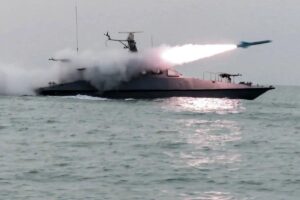
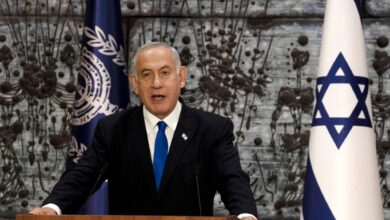
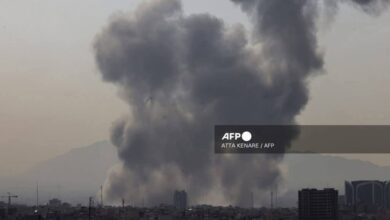
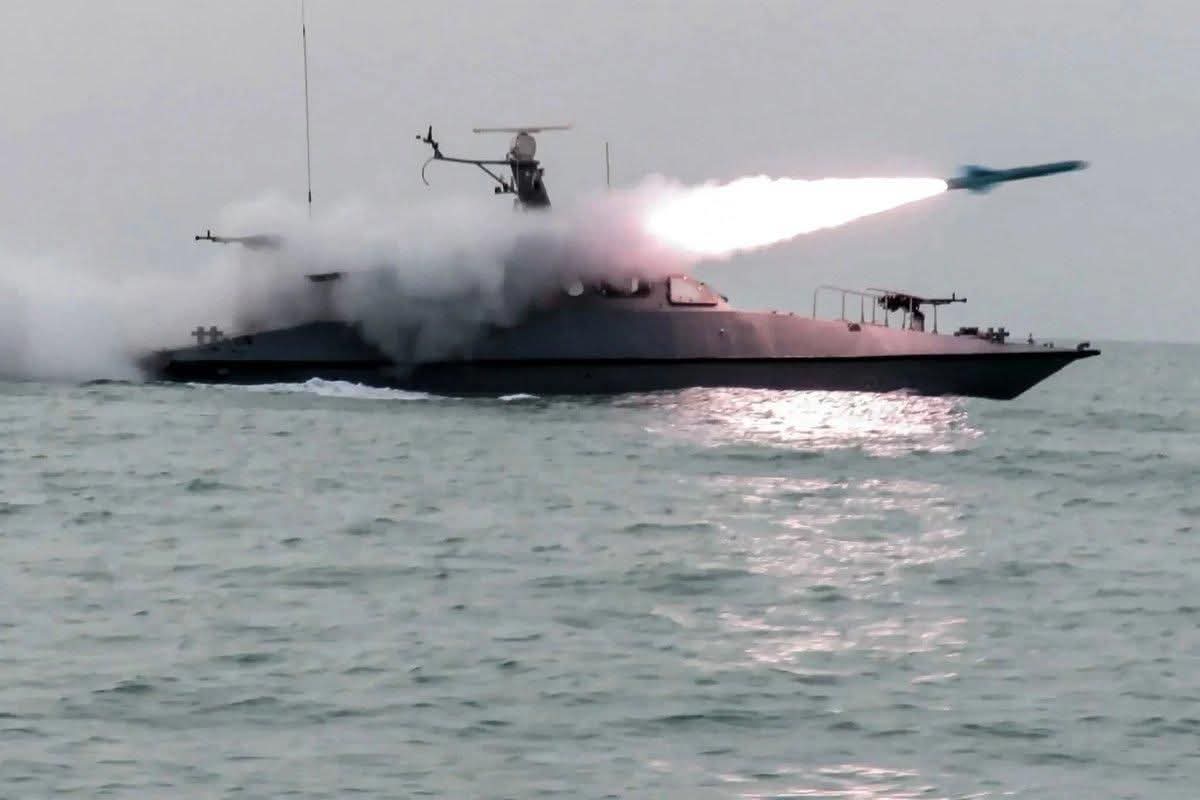
Today, the world faces a remarkably similar scenario, though the geographic context has shifted to the Middle East. Rising tensions among Iran, Israel, and the United States evoke the specter of a conflict that could extend far beyond the immediate region. The question confronting global leaders is chillingly familiar: could a regional confrontation once again trigger a chain reaction, threatening global stability and peace?
The lessons of Sarajevo are instructive. In 1914, the assassination of a single heir set off a domino effect. Austria-Hungary’s retaliation against Serbia activated Russian mobilization, prompting Germany to respond, which in turn drew France and Britain into the conflict. Within weeks, what might have remained a local skirmish escalated into a world war. The aftermath was devastating: four empires—the Austro-Hungarian, Ottoman, Russian, and German—collapsed, millions perished, and entire societies were left in political and economic chaos. In the years that followed, the punitive measures imposed on Germany through the Treaty of Versailles created conditions of humiliation, economic distress, and social unrest that would eventually facilitate the rise of extremist ideologies.
It was in this context that the British economist John Maynard Keynes issued his landmark critique, The Economic Consequences of the Peace. Keynes warned that imposing excessive reparations on Germany was not only morally unjust but politically dangerous. He argued that such policies would destabilize Europe and sow the seeds of another conflict. History validated his warning. Hyperinflation, mass unemployment, and political radicalization in postwar Germany created fertile ground for the rise of Adolf Hitler, ultimately leading to the Second World War. Keynes’s observations remain a cautionary tale: economic punishment, when divorced from strategic foresight, can generate far-reaching consequences.
Equally prescient was the Kenyan scholar Ali Mazrui, who consistently emphasized that global conflicts are rarely isolated events. According to Mazrui, wars are often the outward manifestation of deeper civilizational anxieties, unresolved grievances, and structural inequalities. Humiliation, whether cultural, political, or economic, can transform grievances into militancy. Applying Mazrui’s insights to today, decades of sanctions, political assassinations, and proxy conflicts in the Middle East have fostered narratives of existential threat, mistrust, and victimhood on all sides. When national identity and survival intertwine with fear, compromise becomes politically difficult, creating a volatile environment in which a single incident could trigger disproportionate retaliation.
Modern alliances amplify the risk of escalation. While Europe’s rigid treaty systems contributed to the spread of war in 1914, today’s interconnected global security environment presents similar hazards. The United States maintains strategic commitments to Israel, while Iran exercises influence through allied militias and regional partners. Major powers such as Russia and China watch closely, balancing their own strategic interests. Any limited military engagement between Israel and Iran, especially involving American support, could quickly draw in other nations. Strategic chokepoints, such as the Strait of Hormuz, are vital for global energy supply. Disruption in these areas would not be a localized problem; it would reverberate across global markets, affecting energy prices, supply chains, and economies far from the Middle East. History warns that once conflict begins, the speed of escalation often outpaces diplomacy.
The technological context of modern warfare further exacerbates the danger. Whereas the First World War relied on telegraphs, rail mobilization, and weeks of preparation, today’s conflicts unfold in a hyperconnected, high-speed environment. Hypersonic missiles, drones, and cyber capabilities enable attacks and counterattacks in a matter of minutes. The window for measured political decision-making is drastically reduced. Mistakes, miscalculations, or misinterpretations could spiral into uncontrollable escalation, potentially leading to widespread regional destruction.
Economically, the consequences of such a war would be global in scope. John Maynard Keynes’s warnings after the First World War underscore the critical link between economic stability and political security. A major conflict in the Middle East would likely disrupt oil production and transport, trigger global inflation, and exacerbate food insecurity. Vulnerable nations, particularly in Africa and Asia, would bear disproportionate burdens. The Great Depression of the 1930s, which intensified extremist movements in Europe, demonstrates how economic instability can catalyze political radicalization. In a modern context, a conflict-driven economic crisis could provoke social unrest, mass migration, and political instability across multiple continents.
The nuclear dimension adds an existential layer to the threat. Unlike the wars of the early twentieth century, today’s actors possess weapons capable of annihilation. Even the perception that a regional war could escalate to a nuclear exchange introduces fear-driven instability. This alone could prompt a global arms race, as states recalibrate their security doctrines in response to perceived threats. The Cold War illustrated the fragility of deterrence and the dangers inherent in miscalculation. Combined with cyber warfare and digital misinformation, the potential for accidental escalation is alarming.
Civilian populations would likely suffer the most. Modern warfare is rarely fought on clearly defined frontlines. Proxy conflicts, asymmetric tactics, and cyber-attacks increasingly target infrastructure critical to civilian survival: electricity grids, water supply systems, healthcare facilities, and communication networks. The Syrian civil war has already illustrated the devastating impact of regional proxy conflicts on civilian populations, displacing millions and generating long-term humanitarian crises. Should the Middle East escalate into full-scale conflict, the consequences would extend far beyond the immediate theater of war, impacting millions across neighboring regions and the broader Global South.
History provides a clear moral lesson: overconfidence and miscalculation are lethal. Leaders in 1914 assumed war would be short, decisive, and manageable. Instead, four years of trench warfare, massive casualties, and societal disruption ensued. Similarly, policymakers today may believe that targeted strikes, assassinations, or limited operations can remain confined. Yet wars have their own momentum, often exceeding initial expectations and spreading in ways that are impossible to control.
The responsibility of leadership is paramount. Keynes’s refusal to fully endorse the Versailles settlement reflected his understanding that strategic foresight is as critical as military or political power. Ali Mazrui’s scholarship similarly underscores the importance of moral and intellectual responsibility, emphasizing dialogue and recognition of mutual vulnerability. In the interconnected world of 2026, where economic, environmental, and technological interdependence binds nations together, leadership failure in one region can have cascading global consequences.
The contemporary conflict between Israel and Iran, amplified by U.S. involvement, exemplifies the fragility of peace. Escalation could trigger alliance obligations, destabilize regional politics, disrupt the global economy, and amplify the risk of nuclear confrontation. The lessons of the past—both the First and Second World Wars—must inform present decisions. The failure to heed historical warnings can have consequences far exceeding the immediate context of the conflict.
The road from Sarajevo to global war was paved by misjudgment, pride, and rigid alliances. The road from Tehran to potential catastrophe is still under construction. Decisions made today—whether toward diplomacy or escalation—will determine whether this path leads to renewed destruction or the preservation of global stability. History has written the warning in bold: regional conflicts, when entangled in mistrust, pride, and militarization, can engulf the world. What remains uncertain is whether the global community will choose to read, understand, and act upon that warning before it is too late.
Lastly, the responsibility rests heavily on the shoulders of policymakers, diplomats, and global institutions. Economic stability, moral foresight, and recognition of mutual vulnerability must guide decisions. History offers no guarantees, only lessons. The challenge is to apply them wisely, to prevent another conflict that starts as a spark but threatens to consume humanity itself. The world has survived Sarajevo before, but survival requires vigilance, foresight, and the humility to learn from the mistakes of the past.