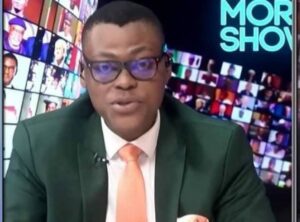
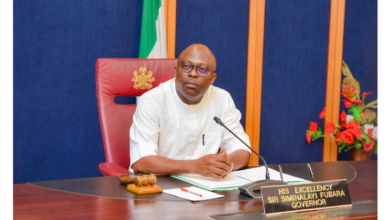
Rufai Oseni’s Arise On-air commentary – When Politically Biased Discourse Becomes a Threat to Democracy

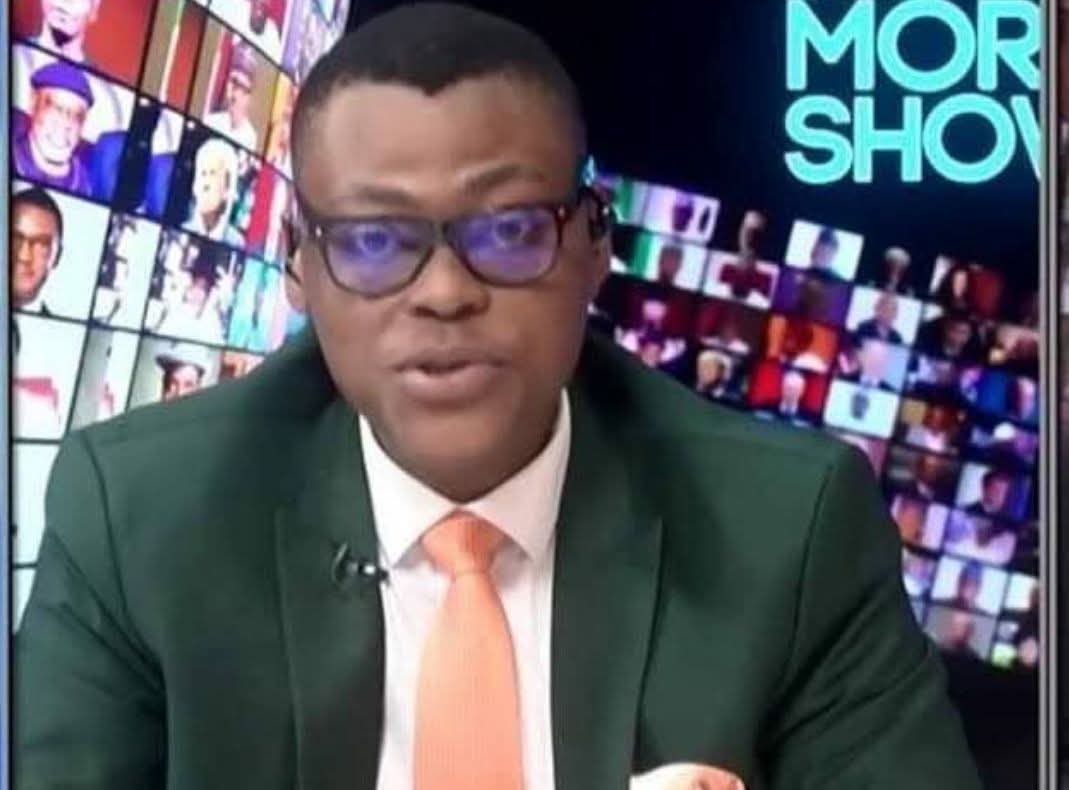
Rufai Oseni’s Arise On-air commentary – When Politically Biased Discourse Becomes a Threat to Democracy
Repeated unverified claims and biased commentary by the media personality are weakening public trust in Nigeria’s electoral institutions, prompting calls for accountability from INEC and civil society alike.
In the theatre of modern broadcast politics, one recurring performer is starting to irritate rather than persuade. The commentator’s habit of advancing explosive, evidence-thin claims on national television has moved beyond mere partisanship and into the territory of civic hazard. What plays as punditry for some is, for others, a string of defamatory assertions that demand institutional redress.
The network that routinely gives him the microphone has become an amplifier for propaganda that substitutes suspicion for verification. Each time the commentator mounts that platform he trades depths for scripted outrage, repeating allegations of electoral malpractice as if doing so were the equivalent of forensic proof. The effect is degrading, citizens are handed certainty where only assumption exists, and public confidence in the machinery of elections is steadily undermined.
There is an urgent difference between critique and calumny. A functioning democracy thrives on robust scrutiny of power and policy, but scrutiny requires discipline, facts, verifiable evidence, and a willingness to be corrected. When accusations of rigging and institutional sabotage are broadcast as settled truth without documentary backing, the victims are not only those named or implied, the real casualty is the democratic system that binds citizens to process and law.
Equally troubling is the selective choreography of outrage. The commentator’s narrative habitually frames the ruling administration as uniquely culpable while offering little parity of inquiry into failings by other actors. That selective lens undermines the credibility of legitimate criticism and feeds a partisan echo chamber in which allegations circulate without consequence. If every sensational assertion is treated as sacrosanct, the public square becomes less a forum for resolution than a hall of mirrors where perception outpaces proof.
Legal scholars and media standards experts argue a blunt remedy, accountability. When public statements on national airwaves cross into demonstrably false territory and injure reputations or institutional trust, the affected bodies have both the right and the responsibility to seek remedies that reaffirm standards. The electoral commission, as guardian of process, must weigh whether silence in the face of repeated, potentially libelous claims is tantamount to silent approval. The rule of law depends on institutions defending their integrity, not shrinking from the courtroom because the arena is politically fraught.
Critics of the commentator also point to a style problem, performance masquerading as analysis. Where veteran columnists and seasoned analysts interrogate claims with context and counter-evidence, his contributions often revert to performative allegiance to a political brand. The result is a cheapening of public debate, viewers are left with the impression that commentary has become a battleground for loyalty rather than a platform for insightful analysis.
If Nigerian democracy is to deepen, the public must relearn two essential habits, humility before evidence, and intolerance for unsubstantiated attacks. Political movements and media voices have every right to agitate, to mobilize, and to criticize. They do not, however, have the license to undermine institutions by normalizing reckless allegations. Until broadcasters, commentators, and the institutions they assail reassert a commitment to verifiable truth, public faith will remain precarious.
The remedy begins with accountability and ends with a higher standard for public discourse. Let the networks demand sourced, serious analysis, let the commentators temper zeal with scholarship, and let the electoral authority consider the legal avenues that preserve both its reputation and the rule of law. Democracy cannot thrive on theatrics, it survives on responsibility.
©️ Adebamiwa Olugbenga Michael is a Lagos-based political economy and policy intelligence analyst and publisher of The Insight Lens Project, providing data-driven insights across Nigeria and West Africa using open-source data.