Politics

3.7 Million Nigerians Displaced, Living in 3,900 Camps Nationwide

3.7 Million Nigerians Displaced, Living in 3,900 Camps Nationwide

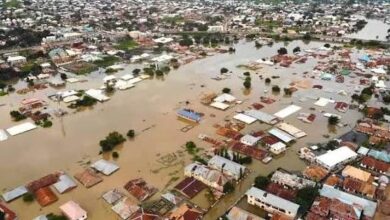
Nigeria’s worsening security crisis has forced 3,725,593 people from their homes, leaving them scattered across about 3,900 internally displaced persons (IDP) camps and informal settlements across the country.

The figure, compiled from humanitarian and government data, highlights the enormous human cost of years of insurgency, banditry, communal conflicts, and violent attacks on rural communities.

Officials and humanitarian agencies say the displaced population—equivalent to the population of some small countries—reflects how deeply insecurity has disrupted daily life across several regions of Nigeria.

North-East Remains Epicentre

The North-East, which has battled insurgency from groups such as Boko Haram and Islamic State West Africa Province, accounts for the largest share of displaced persons.

Borno State alone hosts about 1.7 million displaced residents, many of whom fled repeated attacks on villages, destruction of homes, and kidnappings by insurgent groups.

Thousands remain in camps around the state capital, Maiduguri, while others live in host communities that have absorbed displaced families.

North-West Banditry Fuelling New Displacement

In the North-West, banditry and mass kidnappings have created another wave of displacement.

States such as Zamfara State, Katsina State, Sokoto State, and Kaduna State have witnessed repeated attacks on villages, forcing residents to abandon farms and homes.

Authorities estimate that Zamfara alone has over 270,000 displaced persons as a result of bandit violence.

North-Central Violence Expands Crisis

The North-Central region has also seen rising displacement linked to farmer–herder clashes and attacks on rural settlements.

In Benue State, often described as Nigeria’s “food basket,” more than 500,000 people are currently living in IDP camps, following repeated attacks on farming communities.

Other affected states include Plateau State and Taraba State, where communal violence has also displaced thousands.

Living Conditions in the Camps

Many IDP camps across the country face severe humanitarian challenges, including:

Overcrowded shelters

Inadequate healthcare services

Poor sanitation facilities

Limited access to food and clean water

Humanitarian organisations warn that the situation is particularly difficult for women and children, who make up the majority of displaced populations.

Attempts to Close Camps

Some states have tried to reduce the number of camps through resettlement programmes.

Authorities in Borno State and Yobe State say several camps have been closed as displaced residents were encouraged to return to their communities.

However, security experts warn that many of these returns remain fragile, as renewed attacks often force families to flee again.

Growing Humanitarian Concern

Aid agencies say Nigeria’s internal displacement crisis is now among the largest in Africa, reflecting the cumulative effects of more than a decade of insecurity.

Without improved security, reconstruction of destroyed communities, and stronger economic support for affected populations, experts warn that millions of Nigerians may remain displaced for years to come.


Leave a Reply

Your email address will not be published. Required fields are marked *

Back to top button