Umahi: It’s Not Yet South-East’s Turn for Presidency, Warns Obi Against 2027 Bid
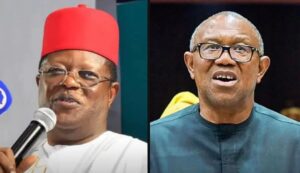
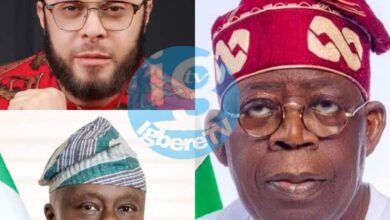
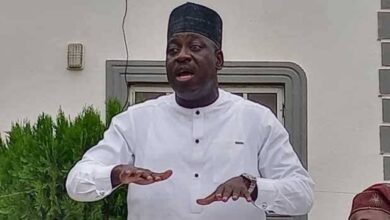
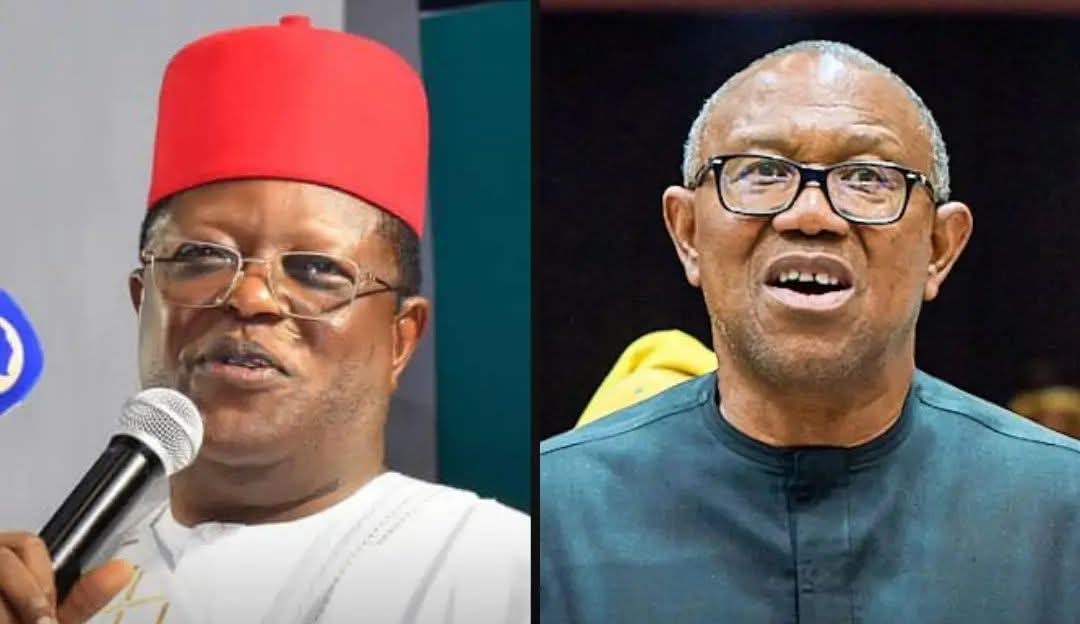
Minister of Works, David Umahi, has said former Anambra State governor and Labour Party presidential candidate, Peter Obi, should be told “in plain language” that it is not yet the turn of the South-East to produce Nigeria’s president, warning that his ambition for 2027 could endanger the region.
Umahi, an influential South-East figure in the ruling All Progressives Congress (APC), argued that the presidency is currently zoned to the South as a bloc, with President Bola Ahmed Tinubu occupying the slot under an informal power-rotation understanding that shifted power from the North in 2023.
According to the minister, the South-East should wait until after Tinubu completes what he described as the region’s expected two-term cycle ending in 2031 before pursuing the presidency.
He maintained that the South had collectively agreed before the 2023 election that power should rotate to the region after former President Muhammadu Buhari’s tenure, insisting that Tinubu’s presidency represents the entire South, not only the South-West.
Umahi also urged South-East political leaders to rally behind Tinubu’s administration and avoid moves that could isolate the region from the centre of power, warning that premature presidential agitation could undermine political stability and bargaining strength for the zone.
The remarks were widely interpreted as a direct message to Obi, who remains one of the most prominent opposition figures ahead of the 2027 election cycle and is seen by supporters as a leading South-East contender for the presidency.
Obi has, however, rejected zoning-based objections to his potential candidacy, insisting that Nigeria’s presidency should be decided by voters rather than elite political agreements. He has argued that competence, vision and public support — not regional turn-taking — should determine electoral outcomes.
The exchange highlights an emerging fault line within the South-East political class over how best to pursue the long-standing quest for an Igbo presidency, with some leaders prioritising alignment with the ruling APC government while others favour open national contestation.
The South-East remains the only geopolitical zone yet to produce a democratically elected president since Nigeria’s return to civilian rule in 1999, a reality that continues to shape political calculations and regional debates ahead of 2027.