Peter Obi Is Not Desperate to Be President — But His Desperation to Contest Is Destroying the Opposition


Peter Obi Is Not Desperate to Be President — But His Desperation to Contest Is Destroying the Opposition
Peter Obi has offered a revealing confession. “I am not desperate to be president,” he said at a youth programme in Onitsha in April 2026. “I am desperate to see Nigeria work.” In a separate interview, he doubled down: “I am not desperate to be president. I am desperate to see Nigeria work.” On its face, this sounds noble — the selfless reformer, unburdened by personal ambition, driven only by national salvation.
But when ambition wears the mask of martyrdom, it becomes harder to recognise for what it truly is. For all his protestations, Peter Obi has spent the past three years doing everything a man desperate to contest can possibly do. And in that desperation, he has achieved something remarkable: he has become the single greatest obstacle to the very opposition unity that could finally unseat Bola Tinubu in 2027.
The Platform Chase: A Man Without a Home
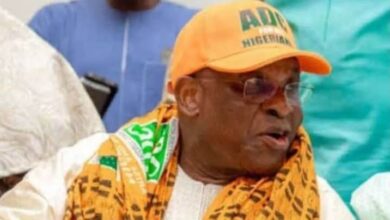
Obi’s political pilgrimage since 2023 reads like a parable of restlessness. He left the Labour Party after a bitter internal takeover, alleging that forces loyal to the establishment had captured the platform that launched him into national stardom. He joined the African Democratic Congress (ADC) with great fanfare, positioning himself as the vanguard of a grand opposition coalition alongside Atiku Abubakar, Rabiu Kwankwaso, and other heavyweights. But within months, that platform buckled under its own contradictions. The ADC leadership crisis spiralled into the courts, and last Thursday’s Supreme Court judgment — which affirmed the David Mark-led faction — failed to resolve the dispute, resetting the matter back to the Federal High Court.
Now, according to multiple reports, Obi is set to defect once more, this time to the National Democratic Congress (NDC). Top leaders of the ADC, including Obi and Kwankwaso, are planning the move as early as next week. The NDC has openly declared it is willing to give Obi its presidential ticket. And the Kwankwasiyya movement has announced that stakeholders from all 44 local government areas of Kano have given Kwankwaso unanimous approval for the defection, with discussions reportedly “about 90 per cent complete.”
If this sounds familiar, it should. This is the same pattern Obi embraced in 2022 when he abandoned the Peoples Democratic Party for the Labour Party after failing to secure its presidential ticket. And in what may be the most damning critique yet, former presidential aide Bashir Ahmad cut to the heart of the matter: “The question here is whether Peter is leaving to escape standing against other aspirants within his party. It is the same path he once embraced in 2022, leading to the 2023 presidential election.”
Ahmad’s observation is devastating in its simplicity: “If a political figure appears so afraid to test their popularity within their own party structure, it naturally leads to questions about how they intend to build the broad national consensus required to lead a country as diverse and complex as Nigeria.”
Party primaries are the crucible of democratic leadership. They test a candidate’s ability to persuade, negotiate, and build coalitions — precisely the skills required to govern a fractured nation. A man who flees every internal contest, who abandons every platform at the first sign of institutional friction, is not demonstrating strength. He is revealing a pathology: a politician who cannot tolerate the very mechanics of democratic competition.
The Obidient Movement: From Sword to Shackle
Perhaps no irony is more painful for Obi’s camp than the fate of the Obidient movement. What was supposed to be his greatest weapon — a youth-driven, digitally native, passionate army — has become his greatest undoing.
The cracks are now undeniable. In March 2026, Dr Peter Agada, the Director of Finance of the Obidient Movement, resigned in a public rebuke of the group’s structure — or lack thereof. “The lack of structure (in Obidient Movement) does not fit with my personality,” Agada told journalists in Abuja. “They have not been informing me of meetings and activities for a while now. You can imagine a director of finance in an organisation not knowing where or what is happening.”
Agada’s resignation was not an isolated incident. In April, James Kitiya, a former Obidient supporter, publicly announced his defection to the All Progressives Congress, revealing that the difference between the APC and the Obidient movement is the former’s “performance-based campaign strategy, while the latter relies solely on attacks, criticisms, and insults.” Even more tellingly, Kitiya added: “Obi is a good man forever, but the road is clear. Tinubu is working.”
These defections suggest a movement whose initial moral energy is being eclipsed by organisational exhaustion and the cold calculus of political reality. The Obidients remain loud on social media, potent in street protests, and fiercely loyal to their principal. But loyalty without structure, passion without discipline, and indignation without strategy do not win elections. As Sunday Dare wrote in a searing critique of Obi’s political style: “Politics is not a vibes-based exercise. It is built on organisation, coalition, discipline, and data.”
The 2023 election exposed this weakness brutally. Obi mistook social-media enthusiasm for nationwide structure, online applause for polling-unit presence, and moral grandstanding for electoral arithmetic. The Supreme Court later admonished Obi for failing to even demonstrate a clear understanding of his own vote tally while simultaneously disputing the official figures released by INEC. That is not principled opposition; it is political irresponsibility elevated to litigation.
The Opposition Fracture: Obi’s Legacy of Division
The most unforgivable consequence of Obi’s desperation to contest is the permanent fracture he has inflicted on the opposition. The arithmetic of 2023 is now the stuff of Nigerian political legend: Tinubu won with 8.7 million votes. Obi secured 6.1 million, Atiku 7 million, Kwankwaso 1.5 million. Combined, the opposition totalled nearly 15 million votes — enough to sweep Tinubu out of Aso Rock had they run on a single ticket.
Yet here we are, three years later, and the opposition is not closer to unity. It is further apart than ever.
Within the ADC — the supposed vehicle for a grand coalition — the party is now bitterly divided between factions backing an Obi/Kwankwaso ticket and those favouring Atiku with Seyi Makinde or Rotimi Amaechi. The Supreme Court’s intervention has only deepened the bitterness, with party members complaining that new members have hijacked the old structure.
And the rhetoric between rival camps has become so venomous that Tinubu’s supporters must be laughing all the way to the polling booth. Obi and Kwankwaso supporters say they would rather let Tinubu continue for another four years than support Atiku’s aspiration. Atiku’s supporters, for their part, say they would rather endure another Tinubu term than support an Obi/Kwankwaso presidency. In the words of a recent Tribune analysis, “Tinubu is the net beneficiary of their maximalist posturing and internal warfare.”
If Obi were truly desperate to see Nigeria work rather than desperate to contest, he would have long ago accepted the cold arithmetic: a combined ticket with Atiku would be a walkover. It would bring together the North’s most durable political machinery and the South’s most passionate youth movement, commanding the Muslim north, the Christian north, the entire South-East, and substantial slices of the South-South and South-West. Tinubu would be reduced to a regional candidate.
But Obi refuses. His camp has explicitly rejected the notion of a vice-presidential slot. He has repeatedly ruled out being anyone’s deputy. In the ADC, as one incisive analysis put it, “the ticket is not only a nomination; it is the primary mechanism through which financiers, brokers, governors, legislators, party barons, and contractors can rationalise their effort and risk. Conceding the ticket to Obi would convert Atiku from principal to sponsor — an inversion that rarely occurs voluntarily.”
The tragedy is that both men bear responsibility. But for the purposes of this argument, Obi’s intransigence is the more damaging variable. Atiku has run and lost multiple times; he has more reason to cling to ambition. Obi is the newcomer, the reformer, the man who claims to be above the old politics. Yet he has proven himself just as unable to subordinate personal ambition to collective victory as the very establishment he claims to despise.
The Kwankwaso Mirage: A Northern Alliance That Will Not Save Him
To his credit, Obi has recognised his northern deficit. In April, he declared on Arise Television that “nobody can do what I intend to do for the North,” promising an agricultural revolution that would unlock the region’s vast land resources. He has formed the “OK Movement” with Kwankwaso, and the two have held a unity summit in Abuja themed “One Voice, One Vision: In Unity We Win.”
But here is the brutal truth that southern Obidients refuse to acknowledge: in the North, Peter Obi is never a serious option. His gubernatorial record in Anambra is remembered by northern elites as one of calculated frugality that sometimes bordered on insensitivity toward northern migrants. His 2023 campaign rhetoric — widely interpreted as condescending or dismissive of the region’s challenges — left deep scars. Today, Obi is seen by the average Hausa-Fulani voter not as a reformer but as a dividing factor, a man whose rise would upend the fragile federal bargain.
The Kwankwaso alliance, therefore, will be strictly limited — to Kano State and scattered Northern Christian enclaves. It will not deliver the North. It will not even crack open the core northern electorate. To the ordinary northerner on the street, the choice is brutally pragmatic: better to allow Tinubu to remain for four more years than to hand over another eight years to the South. Atiku, despite his own baggage, remains the most viable option for northern stakeholders — a Muslim from the region who can protect northern interests in a way Obi never will.
2027: Obi’s Last Dance — and the Clock Is Ticking
Here is the cruelest arithmetic of all. 2027 is Peter Obi’s final window. Consider the two possible outcomes, both of which spell the end of his political relevance.
If Tinubu returns for a second term, power will shift back to the North after 2031, because Nigeria’s unspoken zoning pendulum always swings. By the time the North reclaims the presidency, Obi will be in his mid-seventies, politically exhausted, and facing a northern candidate with the full weight of the region behind him. His moment will have passed.
If Atiku wins instead, power remains in the North for another four or eight years. Atiku will not enter that election without a pre-negotiated succession plan. Before any ballot is cast, he will promise the North’s political establishment who takes over after him — almost certainly another northern power broker. A southern Christian like Obi will not be that heir.
Either way, Obi’s political journey ends after 2027. That is why this coming election is not just another contest. It is a make-or-mar moment for Peter Obi’s entire political afterlife. And yet, instead of building bridges, he is burning them. Instead of consolidating, he is fragmenting. Instead of uniting the opposition, he is ensuring its continued paralysis.
Kawu Adamu Sule captured the moment with surgical precision: “The alleged move of Peter Obi and Rabiu Musa Kwankwaso toward the Nigeria Democratic Congress (NDC) reads exactly like structural desperation: the impulse to abandon institution-building for shortcut politics when the cost of coalition-building appears high. It will not strengthen the opposition; it will fracture it, weaken its bargaining power, and hand the ruling APC a second term by default.”
Conclusion: The Man Who Would Bleed a King, But Cannot Build a Kingdom
Peter Obi is not desperate to be president. His defenders will repeat that as a badge of honour. But his desperation to contest — to remain on the ballot at all costs, to refuse any role that does not place him at the very top, to abandon every platform that fails to crown him instantly — has done more damage to the Nigerian opposition than any APC conspiracy ever could.
The Obidient movement, once a force of hopeful disruption, is now a cautionary tale of organisational neglect and performative outrage. The ADC, once the great hope of opposition unity, is now a house divided against itself. And Tinubu, the beneficiary of it all, watches from Aso Rock as his rivals tear each other apart before a single ballot has been cast.
Peter Obi may bleed Tinubu in the South and among Northern Christians. He may force a fractured election that humiliates the incumbent. But he will not win. And when the dust settles after 2027 — whether Tinubu returns or Atiku ascends — Obi’s political relevance will expire.
That is the tragedy of Peter Obi: the man who could bleed a king but cannot build a kingdom. The man so desperate to contest that he forgot the first rule of politics — that winning requires sacrifice, negotiation, and the humility to sometimes stand in the background.
He is not desperate to be president. He is desperate to be relevant. And in that desperation, he has ensured that 2027 will be his last dance.
The opposition bleeds. Tinubu watches. And Obi, clutching his principles like a shield, walks alone into the fire.