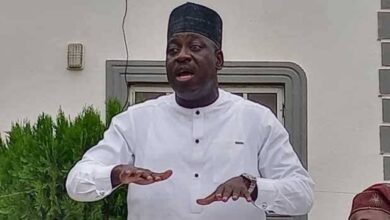
Umahi Says “It’s Turn By Turn,” Calls on Anyi Chuks to Step Down from Ebonyi Governorship Race


Umahi Says “It’s Turn By Turn,” Calls on Anyi Chuks to Step Down from Ebonyi Governorship Race
Nigeria’s 2027 political landscape has continued to generate debate over zoning, political rotation and the principle of power-sharing among geopolitical zones and senatorial districts.
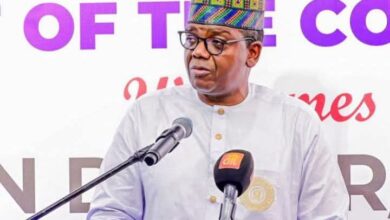
The latest controversy followed remarks attributed to the Minister of Works and former Ebonyi State Governor, David Umahi, concerning the 2027 governorship race in Ebonyi State and the wider question of the South-East’s claim to the Nigerian presidency.
Umahi argued that, just as he believes the presidency should not presently go to the South-East, he also believes the governorship of Ebonyi State should not return to the Ebonyi South Senatorial District at the next election.
“Just like it’s not the turn of the South East and Peter Obi to be president of Nigeria, it’s not the turn of Ebonyi South to be governor of Ebonyi State. So I will go and talk to Anyi Chuks to step down from his governorship campaign. It’s turn by turn.”
The remarks were reported by Leadership in a report published on September 30, 2026, which also quoted Umahi as discussing political representation and his disagreement with supporters of Peter Obi.
Umahi Links Presidential and State-Level Zoning
Umahi’s argument connects two separate political questions: the rotation of Nigeria’s presidency among geopolitical regions and the rotation of the Ebonyi governorship among the state’s senatorial districts.
At the national level, zoning has long been a subject of debate within Nigeria’s major political parties. Supporters of zoning generally argue that political rotation can promote inclusion and give different regions a sense of participation in national leadership.
Critics, however, have argued that political offices should primarily be contested on the basis of constitutional eligibility, political competition and voters’ choices rather than an informal rotational arrangement.
The debate is particularly relevant to the 2027 presidential contest, where questions about regional representation have again become prominent.
‘It’s Turn By Turn’
In Ebonyi State, Umahi’s latest comments bring the question of senatorial rotation into the centre of the 2027 governorship contest.
The minister specifically mentioned Anyi Chuks, whom he identified as a governorship aspirant, saying he intends to speak with him about stepping down from the race.
Umahi’s position is that the governorship should move according to an established sequence rather than remain with the same senatorial district.
However, whether such an arrangement should determine the 2027 contest remains a political question for the people of Ebonyi State and the political parties involved.
The Constitutional Position
While zoning and rotation can influence political-party decisions and voter expectations, Nigeria’s Constitution does not establish a constitutional rule requiring the presidency or a state governorship to rotate among geopolitical zones or senatorial districts.
Ultimately, candidates must satisfy the constitutional and electoral requirements, while political parties determine their nomination processes and voters decide the winners through elections.
Consequently, Umahi’s statement represents a political position on zoning and rotation, rather than a constitutional rule governing who can contest the Ebonyi governorship.
Umahi’s Broader Political Argument
The statement also forms part of Umahi’s broader argument about political representation in the South-East.
In the same reported remarks, he challenged criticism from supporters of Peter Obi and maintained that Ebonyi people should be free to make their own political choices. Leadership reported that Umahi argued that Ebonyi people should not be treated as “second-class citizens” within the South-East.
His latest intervention therefore places both the 2027 presidential contest and Ebonyi’s governorship race within a broader discussion about regional interests, political rotation and the distribution of political power.
2027 Race Likely to Intensify Zoning Debate
With the 2027 elections approaching, zoning is likely to remain an important issue in political negotiations across Nigeria.
In Ebonyi, the argument over which senatorial district should produce the next governor could become an important component of the campaign, particularly if different political actors advance competing interpretations of the state’s political rotation.
For voters, however, the eventual contest will involve more than zoning. Candidates’ policies, programmes, records, qualifications, party platforms and ability to secure electoral support will also form part of the political debate.
For now, Umahi has made his position clear: he believes the Ebonyi governorship should follow a rotational arrangement and says he intends to speak with Anyi Chuks about withdrawing from the race.
Whether that position gains acceptance among political parties, aspirants and voters in Ebonyi State will be determined through the political process leading to the 2027 election.